Qualification
Part of Content-led lead generation
Choosing buying questions that can lead to a relevant enquiry
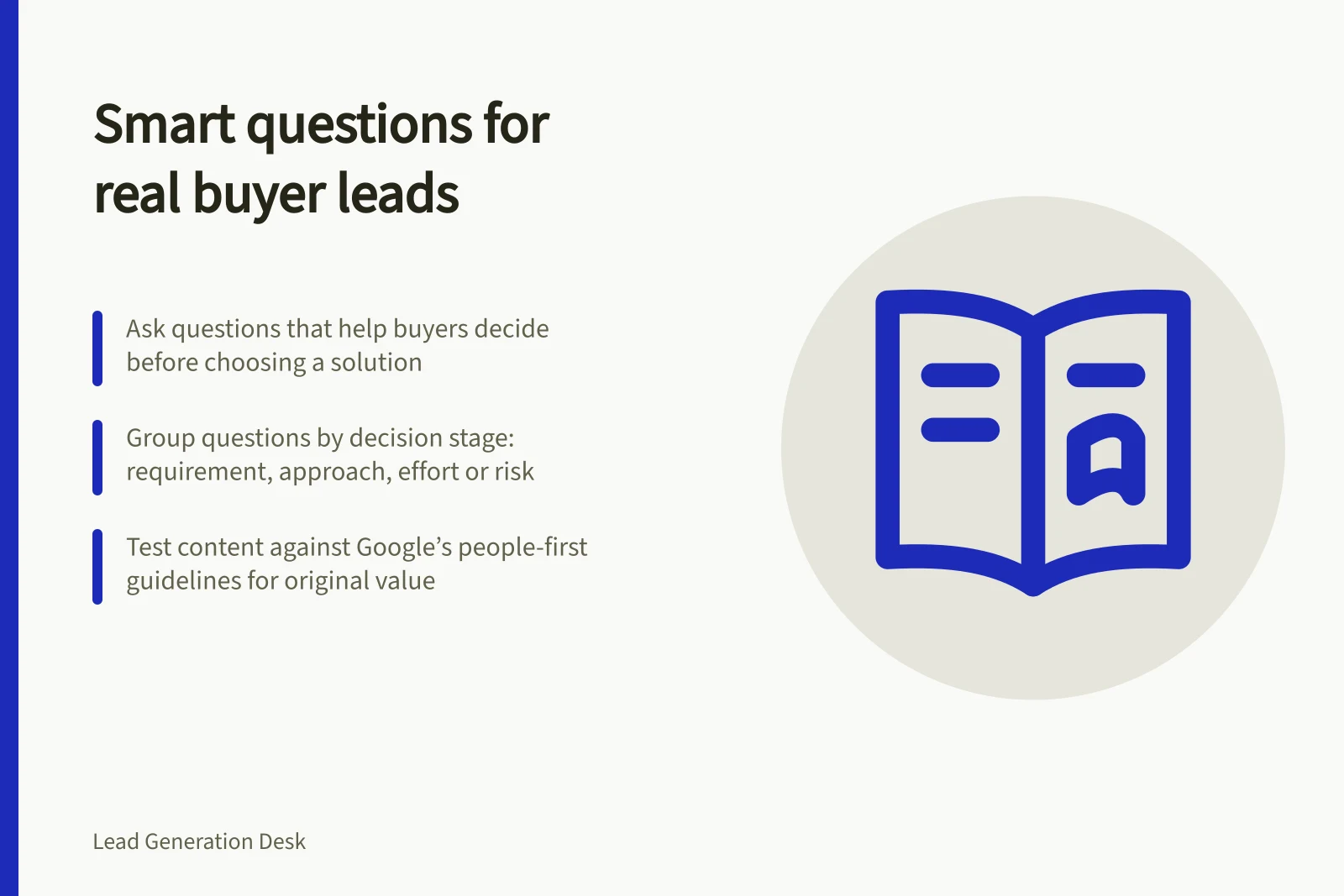
Choose buyer questions with a real decision behind them and an enquiry route that can help with that decision.
Traffic alone does not make a question valuable for lead generation. Look for a question that a genuine buyer must answer before choosing a solution, where your team can add specific, verifiable help.
Start with observed conversations
Collect questions from discovery calls, service requests, rejected proposals and project handovers. Group them by the decision they support: defining a requirement, comparing approaches, estimating implementation effort or checking a risk.
Ask sales which questions signal an actual project and which are broad curiosity. The distinction is editorial judgement, not a guarantee that a reader will enquire.
For a hypothetical equipment supplier, “What is a machine?” may attract a large mixed audience. “Which site measurements are needed before specifying this machine?” could help someone preparing a purchase. The latter still needs a complete answer; hiding the measurements behind a form would defeat its purpose.
Google’s people-first content guidance asks whether content provides original information and substantial value. Test the proposed article against that standard.
Can the team explain the trade-offs, offer a practical example and state where advice depends on the reader’s context? If not, interview a knowledgeable operator before publishing.
Examples of Low-Value vs. High-Value Buyer Questions
- Low-Value Question (broad curiosity)
- What is a machine?
- High-Value Question (actionable decision)
- Which site measurements are needed before specifying this machine?
Map a next step, then choose the topic
Write the natural follow-on question. A reader who has gathered site measurements may want an expert to check them; someone comparing approaches may need a scoping conversation. If no appropriate next step exists, the topic may still be useful editorial content, but do not force an enquiry objective onto it.
Prioritise questions by buyer relevance, ability to answer well and observed demand. Review actual enquiries later for fit and repeat objections.