Funnel Experiments
Part of Lead generation experiments
Measuring whether a new call to action attracts the right prospects
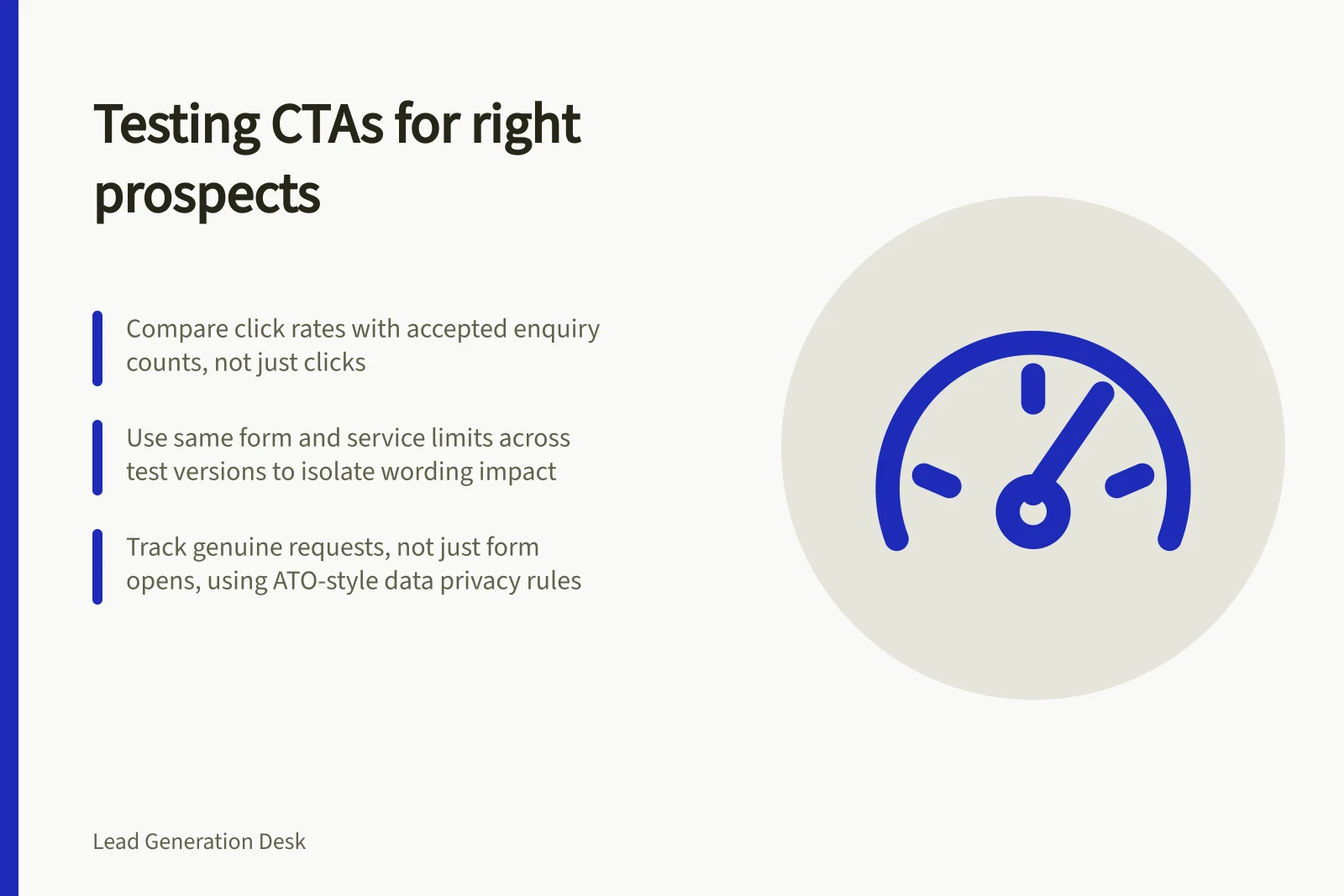
Judge a new call to action by completed, suitable enquiries as well as clicks. Keep the offer stable and check what visitors requested.
Follow people who see a new call to action through to a completed, assessable request. More clicks show that more people acted on the wording. They do not show that those people need a service your team offers.
Keep the offer unchanged
Choose what the wording is meant to clarify: the next step, its expected response or whom it serves. On a page that already offers an installation-requirements review, for example, you could compare “Enquire now” with “Request a requirements review”. Both versions should lead to that same review, with the same form, service limits and response promise.
If the new wording introduces a review the old page never offered, the test changes the offer as well as the invitation. Record both changes rather than attributing the outcome to button text.
Measure beyond the click
Set the primary outcome before launch. For a visitor-level website test, one option is assigned eligible visitors who make at least one sales-accepted enquiry ÷ eligible visitors assigned to that version. Show clicks, successful submissions, genuine requests, accepted requests and cases awaiting assessment separately. Opening a form is not a completed enquiry.
Link each request to the version shown where the setup allows. Check the action and confirmation on a phone and with a keyboard. The confirmation must match what the invitation promised. Keep names, email addresses and unfiltered form text out of ordinary Google Analytics event data; Google’s guidance warns against sending personally identifiable information to Analytics.
Read requests with the team that answers them. Did requesters ask for the offered review? Were their projects within scope? Could the team respond from the details received?
A more prominent or assertive invitation might raise clicks while attracting requests for unavailable work. A more specific one might draw fewer clicks but a similar number of accepted enquiries. Click rate alone cannot settle either case.
Whatever events you implement, they do not by themselves assess the substance of a request; keep the enquiry and acceptance decision in the operational record.
Decide what the wording achieved
Compare versions after allowing similar time for requests to be assessed. Report counts and uncertainty for the primary outcome, with pending and excluded requests visible. If one version wins on clicks but loses on accepted enquiries, examine the expectation its wording set. If too few accepted enquiries exist to distinguish the versions, say so rather than naming a winner from clicks.
Keep wording that better supports the promised next step under the decision rule you set. If both versions cause the same misunderstanding, examine the surrounding service explanation or offer.