Inbound Capture
Part of Lead generation landing pages
Choosing one primary conversion action
Choose a landing page’s main action from the visitor’s next task, check the handoff and measure completed, useful requests.
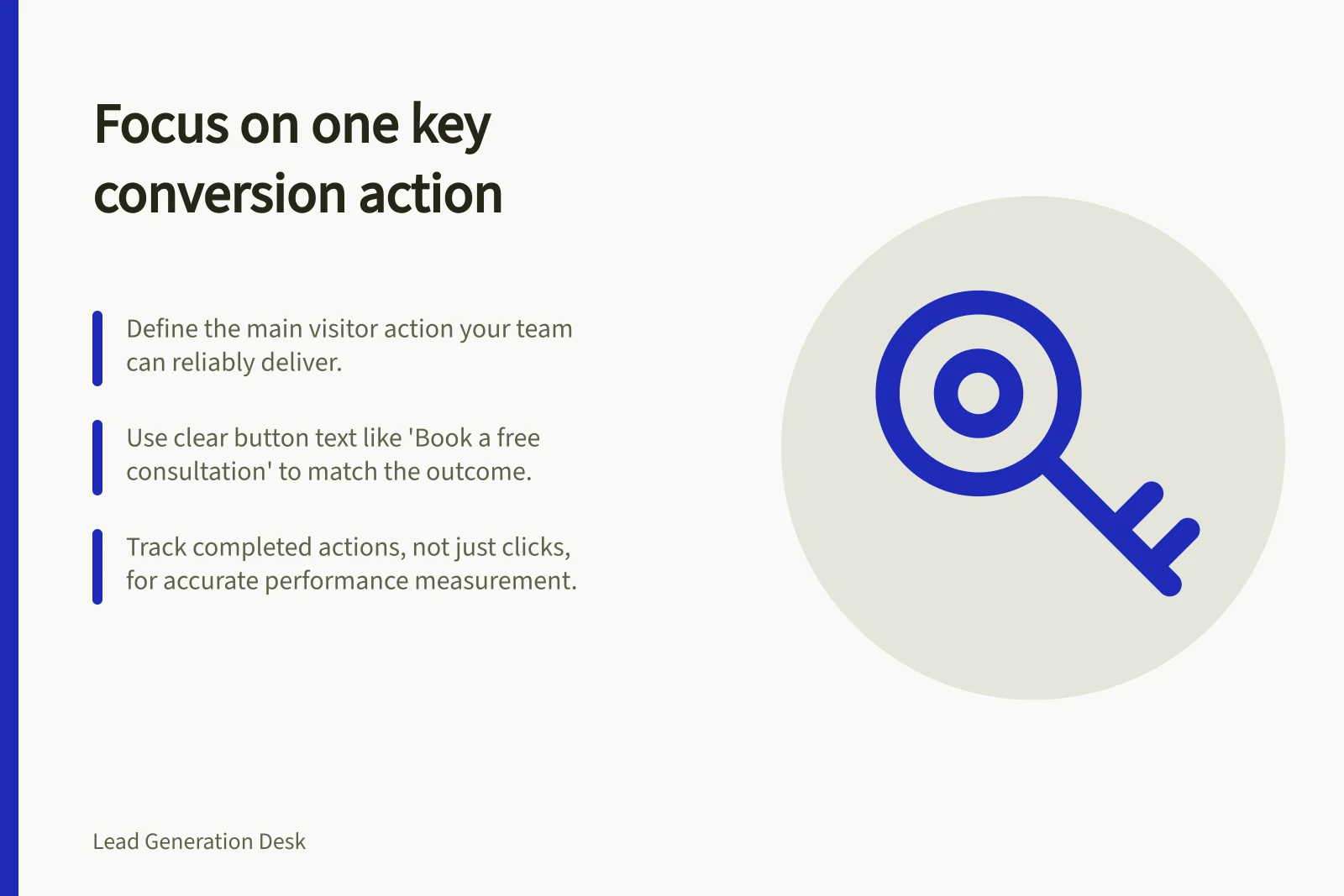
Choose the main action that helps the intended visitor take the next step and that your team can fulfil. Make it easy to recognise throughout the landing page. One primary action does not mean removing a needed phone number, support route or way to keep reading.
Choose from the request you can handle
Describe the visitor’s immediate need, then what the receiving team will do after the action. If the second answer is vague, the invitation probably is too.
| Visitor’s immediate task | Possible primary action | Check before choosing it |
|---|---|---|
| Ask about a defined service | Submit a scoped enquiry | Can the team assess and answer it from the requested details? |
| Discuss a need that requires conversation | Request a call or book an available appointment | Are preparation, availability and confirmation clear? |
| Seek urgent help | Call the stated service number | Is the route genuinely monitored for this need? |
These are options to assess, not a performance ranking. A download or on-page guide may help someone prepare a decision; decide whether it is the page’s main goal before treating its use as a lead. A booking invitation may be premature if the visitor still needs the service explained.
Carry one action through the journey
Use button text and nearby copy that describe the outcome. “Send project details for review” tells the visitor more than “Submit”. A long page can repeat the same action without creating another goal. Keep its meaning consistent through the form or booking screen and confirmation.
A click is not necessarily a completed request. A form may show an error, a call may reach the wrong team, or a requested appointment may still need confirmation. Check the full route before relying on click counts. Give form controls clear labels and useful feedback.
Keep necessary alternatives understandable. Existing customers may need support, and some visitors may need another contact method. Label those routes accurately so they do not imply the same response as the page’s main invitation.
Measure the outcome chosen
Decide what completion means: a successful submission, confirmed booking and answered call are different outcomes. Review whether the resulting requests suit the service. Google Analytics describes recommended events as optional additional events that can be configured to measure behaviours and generate reports. Events do not decide quality on their own.
If few visitors act, review whether the page answered their question and made the next step credible. If many act but the team cannot help them, review the audience and promise. Choose the action for the need, verify its handoff and judge it by the requests it produces.
Key Metrics to Measure Conversion Success
- Successful Submission Rate
- Measure completed form submissions with no errors
- Confirmed Booking Rate
- Track appointments confirmed by the team
- Call Answered Rate
- Verify calls reach the correct team and are responded to
- Request Quality Score
- Assess whether requests align with service capability