Lead Routing
Part of Inbound lead routing
Matching enquiries to the right product or service owner
Map service enquiries to a first responder, resolve overlapping requests and give uncertain enquiries a clear triage route.
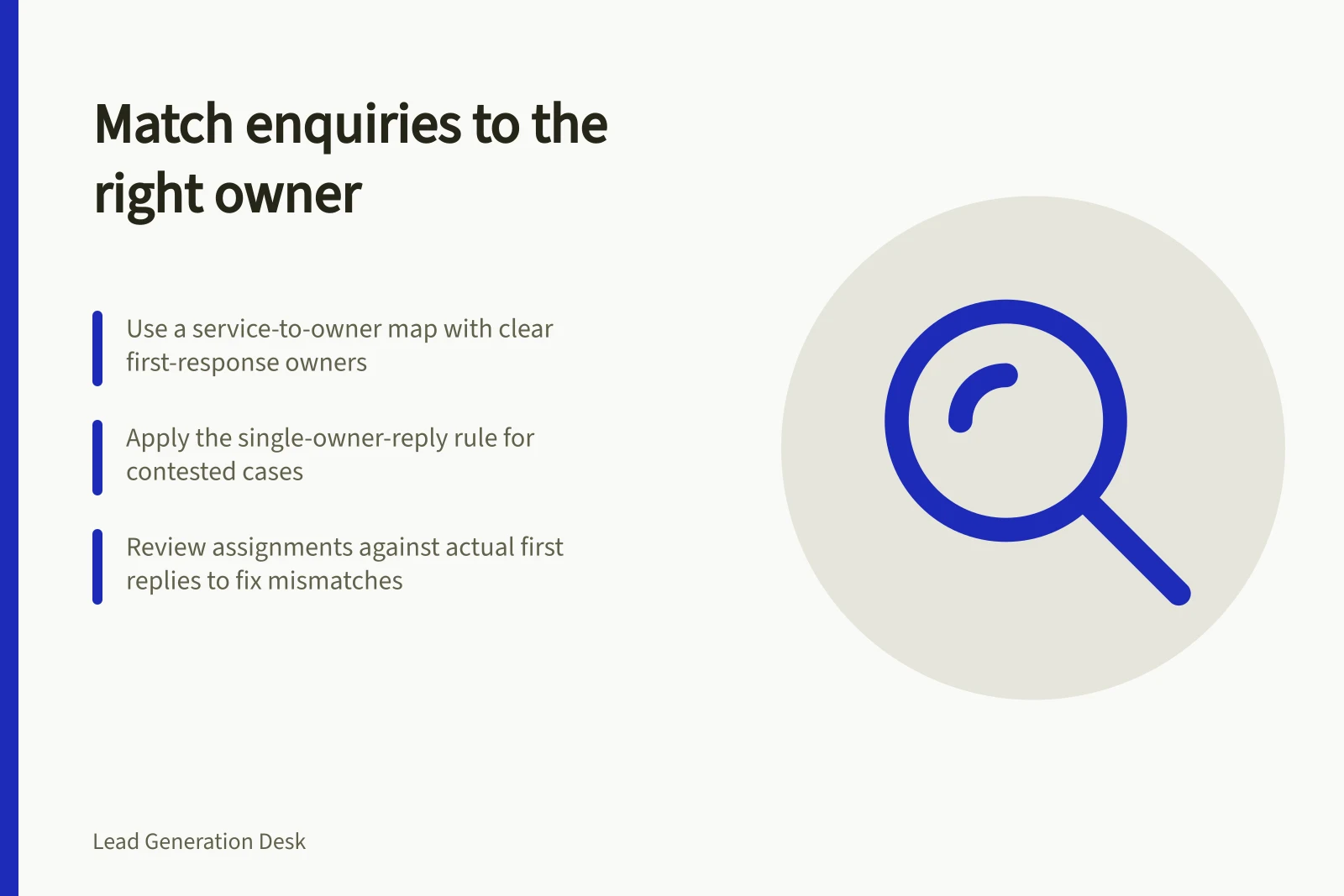
Match an enquiry to the team able to organise its first useful answer. Use the work requested, check existing ownership and give unclear or mixed requests to a named coordinator. The single-owner-reply rule for contested cases is set out under 'Resolve overlaps before setting rules'.
Make a service-to-owner map
For each service the business offers, name the first-response owner, the details that distinguish it from neighbouring services and a backup. Include a route for requests received but not sold, such as existing-customer support.
Describe services in words a requester might use. An internal product code will not help if someone writes 'repair the existing unit' or 'replace it'. Provide an 'unsure' route and update the map when service boundaries or teams change.
| Request pattern | First owner | Check |
|---|---|---|
| One service is clear | That service's response owner | Can the owner handle the first reply? |
| Several services may be involved | Named coordinator | Who will combine specialist input? |
| Service is unclear | Triage owner | Which question would settle the route? |
| Existing-customer issue | Appropriate service or support owner | Is someone already handling it? |
Resolve overlaps before setting rules
Check the request itself and decide which condition wins when several services appear to match. A request to replace an installed product, for example, may concern both sales and service. Choose one person to own the reply while specialists advise internally. If there is an active customer discussion, read recent messages before changing its owner.
Where automated routing uses branches with overlapping criteria, define which condition takes precedence so a record follows one intended path. HubSpot's Rotate record to owner action requires paid sales or service seats, and assigning lead records with it is labelled beta and offers additional distribution options. Configure a service map and a fallback before relying on these actions.
Automation Considerations for Enquiry Routing
- HubSpot Rotate Record Owner (Beta)
- Requires paid sales or service seats
- Salesforce Lead Assignment Rules
- Supports custom lead routing via conditions
- Conditional Workflows (HubSpot)
- Use IF-THEN branches for dynamic routing
Review the decisions
Compare the intended owner, recorded owner and actual first reply for requests from each service, plus unclear, mixed and existing-customer requests. Repeated fallback cases may reveal an unclear intake description or a missing service boundary. Revise the decision that caused the mismatch and review later requests. Assignment by itself does not show that the answer suited the request.