Inbound Capture
Part of Lead generation for professional services
Explaining engagement requirements before a consultation
Tell prospective clients what to prepare, what a consultation covers and how scope and terms will be agreed before professional work begins.
Before a professional services consultation, explain the meeting's purpose, who should attend, what to prepare and what must happen before work begins. This helps a prospective client prepare without mistaking an introductory conversation for an accepted engagement.
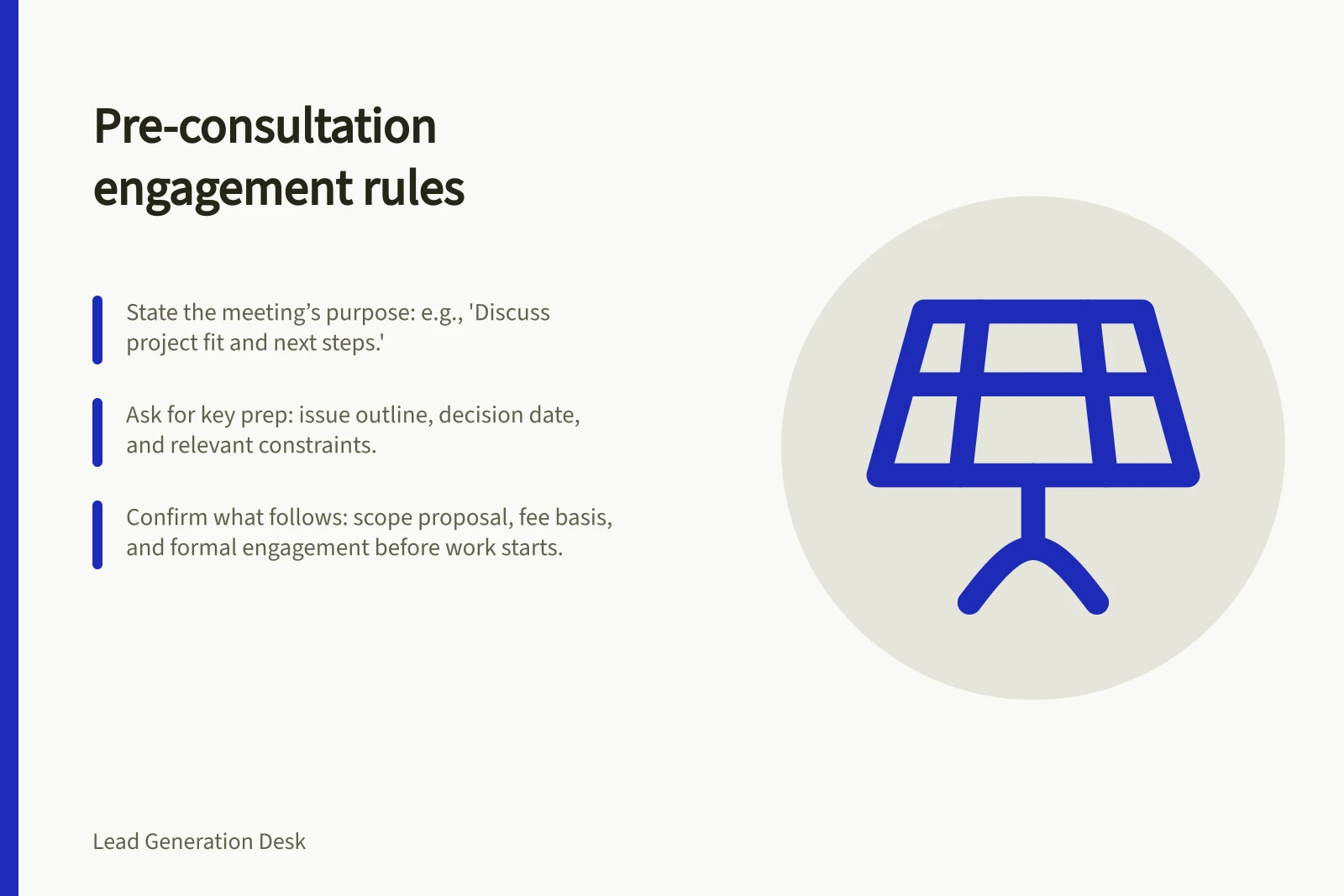
Explain the meeting's purpose
A booking invitation can say: “We will discuss your project, check whether this service fits and agree on a possible next step.” State any charge before the person books. If the call is an initial fit check, do not suggest it includes a complete professional opinion or the start of the project.
Identify who from the firm is likely to attend and which client participants would help. A technical lead may need to explain constraints; someone authorised to decide may need to discuss timing and approval. Keep the request proportionate to the meeting.
Give a short preparation note
Ask for information that will change the discussion: the decision to be made, broad scope, relevant location or system, timing and known constraints. Say whether documents are useful and how they should be shared. Avoid requesting sensitive material or a full set of records through a general booking form before the enquiry has been assessed.
For example: “Please bring a brief outline of the issue and the date by which you need to decide. We will let you know if specific documents are needed after the initial review.” This is sample wording; appropriate preparation depends on the service.
Describe what follows the consultation
- Initial discussion:establish the need and whether the firm may be able to assist.
- Scope and proposal:set out the proposed work, deliverables, client responsibilities, timing and fee basis.
- Acceptance:complete the firm's applicable engagement and onboarding steps before work starts.
A consultation may identify an approach without settling final scope or cost. If checks are required before the firm accepts a client or project, explain that possibility without implying the same rules apply to every profession.
Other practices must follow their own professional requirements.
Put the details at the booking point
A concise “Before you book” explanation should sit near the consultation action, with essentials repeated in the confirmation. The invitation and follow-up should make clear what the firm will do next and what remains subject to an agreed scope.
Key Engagement Requirements Before Consultation
- Purpose of meeting
- Clarify fit, scope and next steps — not a full professional opinion.
- Client preparation
- Provide brief issue summary and decision timeline.
- Fees disclosed
- State any charge before booking — no hidden costs.
- Next steps
- Agreement on scope and terms required before work begins.